Abbey LL Chain Wear Tool – Precision that Accounts for Modern Drivetrain Variables
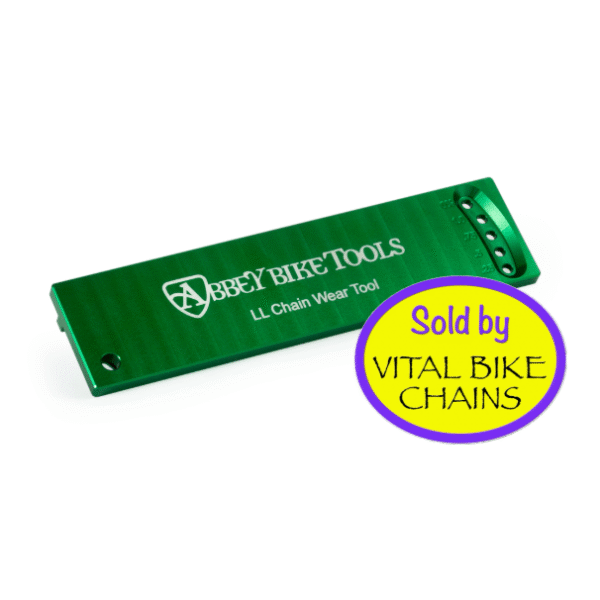
Chain wear measurement got complicated when SRAM introduced flat top chains with 0.010″ larger rollers. That seemingly small difference translates to 0.2% variance in wear measurement—enough to mean the difference between replacing just your chain or your entire drivetrain. The Abbey LL Chain Wear Tool addresses this reality with CNC-machined precision that actually accounts for roller diameter variations.
Why Precision Matters More Than Ever
Modern 1x drivetrains operate differently than the systems most of us learned on. They’re designed to cross-chain—something we used to avoid—which creates different wear patterns. Add SRAM’s larger flat top rollers and the typical ±0.010″ accuracy of laser-cut tools, and you could be looking at measurement errors that double the actual variance. When you’re replacing chains between 0.5-0.7% wear, that margin of error can cost you a cassette.
Engineering that Solves Real Problems
Abbey’s approach uses a V-shaped notch that locates the center of each roller regardless of its diameter. This means accurate measurements whether you’re running traditional chains or SRAM’s flat top design. Line up the pin with one of five precision-machined holes on the opposite end to determine exact wear percentage. The design also prevents roller wear from influencing your measurement—something other tools overlook.
Lateral Wear Measurement—An Industry First
This tool uniquely measures lateral chain wear, which directly impacts shifting quality. Remove your chain, pinch it against the boss, hold it vertical, and observe the sag. Anything below 6 indicates compromised shifting that a new chain will improve. No other tool on the market provides this additional diagnostic capability.
CNC Precision vs. Laser Cutting
While most chain wear tools use laser cutting with its inherent ±0.010″ repeatability issues, Abbey CNC machines each tool from billet aluminum. Manufacturing in-house allows them to hold tolerances to 0.0002″—perhaps overkill, but that level of precision eliminates the tool itself as a variable in your measurements.
For Cyclists Who Measure What Matters
Whether you’re maintaining multiple bikes with different drivetrains or simply want confidence in your chain replacement timing, this tool provides the accuracy to make informed decisions. The investment in precision tooling pays for itself the first time you avoid premature cassette replacement due to measurement error.